

If you’re searching for a summit speaker for your annual meeting, the room probably doesn’t exist yet.
The stage isn’t set. The audience isn’t seated. The opening remarks haven’t been written.
But you’re already making one of the decisions that can shape the entire event: who will stand in front of the room and give people something worth remembering?
The right speaker can elevate an annual meeting, leadership summit, or corporate event. The wrong one can become the part of the agenda people quietly forget.
So how do you choose?
Start by looking beyond the highlight reel.
What Should You Look for in a Summit Speaker?
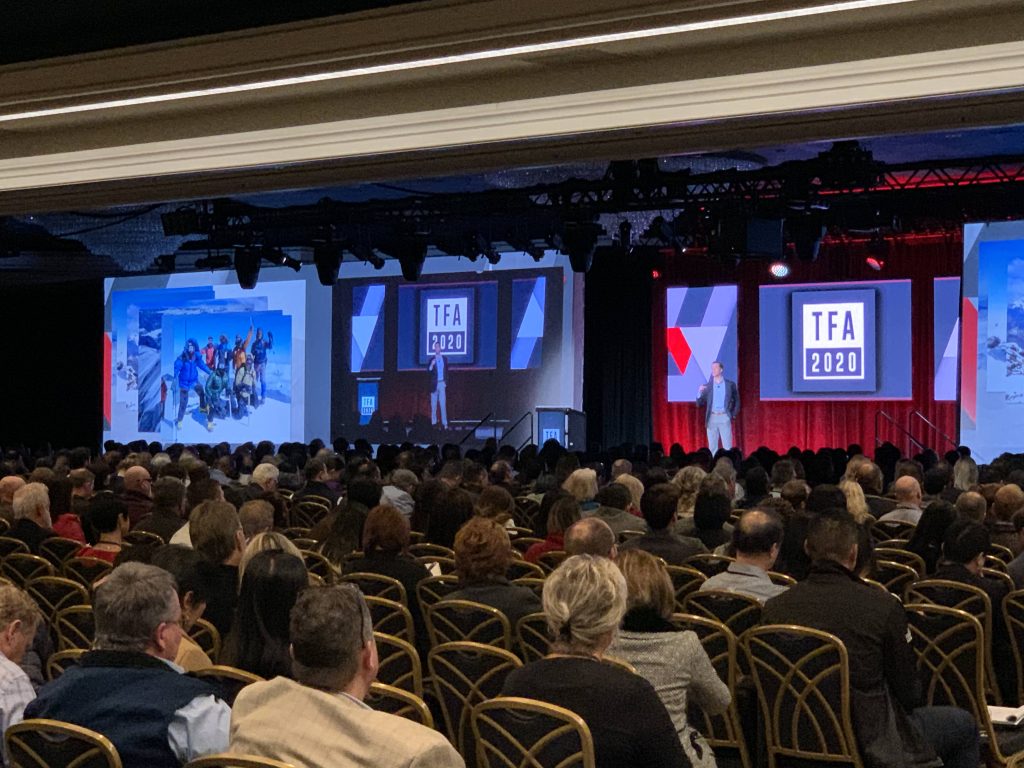
A strong summit speaker should bring clarity, credibility, and practical energy to the room.
Their job isn’t simply to entertain an audience for 60 minutes. It’s to help people see the challenges in front of them differently — and ideally, give them a framework or language they can continue using after the event.
A good event speaker should be able to do three things:
- Name the real challenge in the room.
- Give people a simple idea or framework they can remember.
- Leave the audience with something useful after the applause ends.
If the message disappears as soon as the speaker walks off the stage, you may have purchased entertainment.
If people are still talking about the message weeks later, you’ve made a meaningful investment.
Does the Speaker Understand Your Audience?

One of the most important questions to ask before booking a keynote speaker is whether that person understands the people sitting in the room.
A strong speaker doesn’t simply arrive with a polished presentation and deliver the same talk everywhere.
They ask questions.
Who is attending? What challenges are they facing? What has the organization accomplished? Where is there friction? What does leadership want people to do differently?
The best speakers are curious before they are impressive.
I’ve spent years on rope teams where the wrong assumption can become dangerous quickly. On a mountain, you cannot motivate someone by pretending the difficult section isn’t difficult. You tell the truth, move with discipline, and keep the team focused on the next step.
A conference room isn’t Everest.
But the principle still applies.
The right conference speaker understands the pressure your audience is carrying and knows how to address it honestly.
What Should a Speaker Do Before the Event?
The work of a great annual meeting speaker begins well before the keynote.
Your speaker should make the planning process easier, not create more work for your team.
Before the event, you should expect a conversation about:
- Your audience
- The event theme
- The organization’s goals
- The tone of the meeting
- Recent wins and challenges
- What your audience needs to hear
- What you want people to do differently afterward
The speaker should ultimately be able to answer a simple question:
“What do you want our people to do differently when they walk out?”
That’s a much more useful question than simply asking, “What should the keynote be about?”
For my keynote, One Step Beyond, the central idea is moving teams from complacency to action. But the way that message is delivered should depend on the room.
A sales kickoff has different pressures from a leadership summit. A corporate event has different needs from an association meeting.
The mountain language may stay familiar.
The message should still meet the audience where they are.
Learn more about the One Step Beyond speaking approach or get to know more about my background on the David Snow about page.
What Should You Give Your Speaker Before the Planning Call?
You don’t need to create a 40-page briefing document.
You need to provide honest context.
A useful speaker briefing might include:
- Event theme
- Audience size
- Audience demographics
- Agenda
- Recent organizational wins
- Current frustrations or challenges
- Topics or language to avoid
- Desired outcome after the keynote
This information gives the speaker a chance to prepare for the actual room instead of guessing.
It also gives you an early indication of whether you’ve chosen the right person.
If a speaker receives useful context but can’t turn it into thoughtful questions, that’s worth paying attention to.
Don’t Choose a Speaker Based Only on Testimonials
Testimonials matter.
So does experience.
But neither should be the only reason you hire someone.
Ask yourself whether the speaker’s experience is relevant to your audience. A speaker can have an impressive résumé and still be the wrong fit for your event.
Look for evidence that they can:
- Connect with your particular audience
- Adapt their message
- Understand your event’s objectives
- Provide a practical takeaway
- Prepare collaboratively with your team
The goal isn’t to find the person with the biggest résumé.
It’s to find the person who can help your audience take the next step.
The Simple Test I Use Before Booking a Summit Speaker
Here’s a question I would use when evaluating a potential speaker:
Can you imagine your audience repeating one line from the keynote in a hallway conversation later that day?
That’s the test.
A memorable keynote doesn’t have to leave people quoting the speaker word for word. But it should give them an idea, phrase, or framework that travels beyond the stage.
One line I often use is:
“Blame is heavy. You can’t climb with it in your pack.”
That’s the kind of message a speaker should aim for.
Not a perfect performance.
A useful message that travels.
Your Speaker Should Help Carry the Meeting
Your annual meeting is already carrying a lot.
There are schedules, presentations, leadership updates, goals, logistics, and expectations.
Your speaker shouldn’t add another layer of complexity.
The right motivational speaker or leadership speaker should help bring those pieces together and give the audience a perspective they can carry into the work ahead.
Think of it like a rope team.
Everyone has a role. Everyone needs to understand the terrain. And everyone needs to know what comes next.
Your speaker is part of that team for the time they’re on stage.
Choose someone who understands the responsibility.
The Takeaway
Choosing the right summit speaker isn’t about finding the loudest voice or the most impressive résumé.
It’s about finding someone who can meet your audience where they are and help them move beyond it.
Look for preparation.
Look for relevance.
Look for credibility.
Most importantly, look for a message that can continue working after the stage lights go off.
Your annual meeting deserves more than a speaker who simply fills a time slot.
It deserves someone who can help your people see the next step — and give them the language and confidence to take it.
FAQ
How far in advance should I book a summit speaker?
For annual meetings and leadership summits, earlier is generally better. Booking several months ahead gives you more date options and gives the speaker time to understand your audience and tailor the message appropriately.
Should I hire a motivational speaker or a leadership speaker for an annual meeting?
It depends on the outcome you’re looking for. If your audience needs energy and renewed momentum, a motivational speaker may be a strong fit. If leaders need practical tools and perspective for the year ahead, a leadership speaker may be more appropriate.
What makes a summit speaker worth the fee?
A speaker is worth the investment when the message supports your event’s goals and continues to influence the audience after the session ends. The value isn’t simply the hour on stage; it’s the clarity, confidence, and action that follow.