
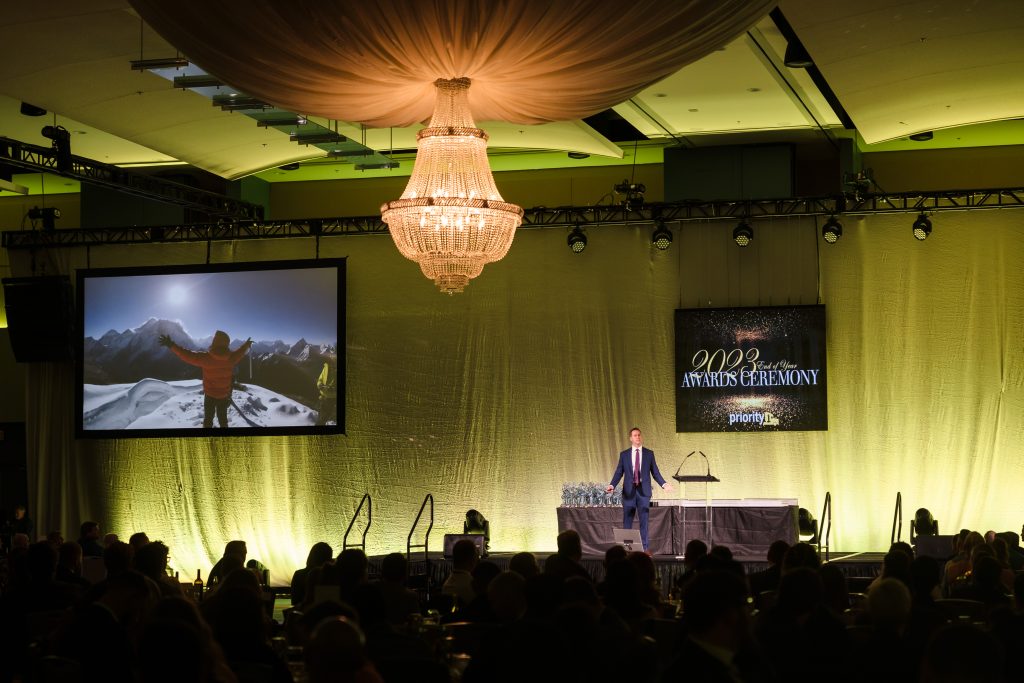
You’ve booked the keynote speaker.
The date is confirmed. The contract is signed. The room is reserved.
Then someone sends the speaker an email that says:
“Here’s the agenda. The audience is about 400 people. Dress is business casual. See you next month.”
And that’s supposed to be the briefing.
If you want to know how to brief a speaker, that’s where the process can go wrong.
A keynote feels custom because the speaker understands the people sitting in the room, what they’ve experienced, what leadership needs from them, and why the event matters right now.
The good news is that a strong speaker brief doesn’t need to be 50 pages long.
It needs to be honest, useful, and specific.
If you give your keynote speaker the right context before event day, you’re giving them a much better chance of delivering something that feels like it belongs to your organization—not a presentation that could have been given anywher
How Do I Brief a Speaker So the Keynote Feels Custom?
Start with five things:
- Who is in the room
- What the audience has experienced recently
- What leadership wants people to take away
- Where the keynote sits in the agenda
- Anything sensitive the speaker should know
That’s it.
You don’t need to send every company document you’ve ever produced.
You need to help the speaker understand the terrain.
The more clearly the speaker understands the terrain, the more intelligently they can prepare.
What Should I Tell a Keynote Speaker Before the Event?
Tell them the truth about the room.
If morale is low, say it.
If the organization just had a record year, say that too.
If the company is going through a merger, restructuring, leadership transition, or major change, the speaker needs to understand that context.
A keynote speaker can’t customize a message around information they don’t have.
This is something I’ve learned repeatedly through mountaineering.
On one of my Everest expeditions, a section of the route looked stable from camp. Once we moved into it, we encountered broken ladders, soft snow, and conditions that changed how we needed to move.
The answer wasn’t pretending the conditions were different.
It was understanding what was actually in front of us and adjusting accordingly.
Your event is no different.
If your audience is tired, skeptical, distracted, excited, or carrying tension from something that happened recently, tell the speaker.
A strong motivational speaker isn’t looking for a perfect audience.
They’re looking for an honest understanding of the audience.
What Details Do Event Planners Often Leave Out?
Some of the most useful information isn’t necessarily what’s printed in the event brief.
Before the keynote, tell the speaker:
- What happened in the business during the past year
- What the audience is worried about
- What leadership wants to accomplish
- Whether the session opens or closes the event
- Whether the audience has already sat through several presentations
- Whether the goal is inspiration, action, energy, alignment, or reflection
- How interactive the session should be
- Any subjects or language that should be avoided
These details help an event speaker make better decisions about stories, pacing, humor, examples, and emphasis.
They can also prevent one of the biggest concerns event planners have:
“I don’t want this to sound canned.”
Customization isn’t about changing every word of a speech.
It’s about making sure the right stories and ideas are being used for the right people at the right moment.
If you’re still evaluating whether a speaker’s message fits your event, review David’s speaking topics before putting together your brief.
How Much Information Is Too Much?
There is such a thing as over-briefing.
A speaker doesn’t necessarily need a 50-page company history.
In many cases, one honest paragraph can be more useful than a huge briefing document.
For example:
“Our sales team had a difficult year. We missed our targets, morale is low, and leadership wants people to leave this meeting believing they can change the trajectory of the next 12 months.”
That’s useful.
Compare that with:
“Our company was founded in 1987 and currently operates in 14 countries with 3,200 employees…”
That may be interesting, but it doesn’t necessarily help the speaker understand the room.
Give the speaker what changes the way they prepare.
A short written brief followed by a 15–20 minute conversation can be incredibly effective.
That’s often where the important information comes out—the concerns, expectations, and things nobody thought to put in the official document.

Where the Keynote Sits in the Agenda Matters
This is another detail that’s easy to overlook.
A keynote at 8:00 a.m. is different from a keynote immediately after lunch.
A closing keynote is different from an opening keynote.
A speaker addressing 2,000 energetic attendees at the beginning of a conference has a different job from someone speaking to 200 exhausted leaders at the end of a three-day event.
Tell your speaker where they fit.
Also explain what happens immediately before and after the presentation.
That context can influence everything from the opening story to the amount of audience interaction.
A good conference speaker isn’t just preparing a presentation.
They’re preparing for a specific moment in your event.
A Better Brief Creates a Better Partnership
The best speaker brief doesn’t tell the speaker exactly what to say.
It gives them enough information to make smart decisions.
Think of it as giving the speaker a map before asking them to navigate the terrain.
You provide:
Context.
Goals.
Audience insight.
Constraints.
Then the speaker brings their experience and expertise to the stage.
That’s how a keynote begins to feel custom.
And that preparation benefits everyone.
The event planner has more confidence.
The speaker knows what they’re walking into.
And the audience gets a presentation that feels relevant to them.
The Goal Isn’t a Perfect Brief. It’s a Useful One.
If you’re planning an upcoming conference, leadership meeting, or sales kickoff, don’t overcomplicate the briefing process.
Tell your keynote speaker:
Who is in the room.
What they’re dealing with.
What you want them to take away.
Where the keynote fits.
And what they absolutely need to know.
Then have a conversation.
That last part matters.
A document gives you information.
A conversation gives you context.
And context is what allows a speaker to turn a presentation into something that feels personal, relevant, and timely.
If you’d like to understand more about David’s approach, explore the keynote speaker page or learn more about Peak Persistence.
Frequently Asked Questions
How do I brief a keynote speaker quickly?
Start with the audience, business context, desired takeaway, event timing, and any sensitive information. Then schedule a short conversation so the speaker can ask questions that are difficult to capture in an email.
What should be included in a speaker brief?
A useful speaker brief should include audience information, current challenges, event objectives, schedule and timing, logistics, and anything the speaker should know about the organization’s culture or circumstances.
How do I make sure a motivational speaker doesn’t sound canned?
Give the speaker specific information about your audience and what they’re experiencing right now. A strong speaker can customize their message, but they can’t customize it to information they never receive.
About David Snow
David Snow is a keynote speaker, author of Peak Persistence, and a mountaineer who has led teams on the Seven Summits, including two expeditions on Everest. Before becoming a full-time speaker, he spent more than 20 years in corporate sales leadership.
His signature keynote, One Step Beyond, helps teams move from complacency to action through lessons drawn from leadership, persistence, and high-stakes mountaineering.
Learn more about David’s keynote speaking and speaking topics.
Final Thoughts
A custom keynote doesn’t start when the speaker walks onto the stage.
It starts with the information you give them weeks—or even months—before the event.
You don’t need to write their speech.
You don’t need to send them everything your company has ever published.
You simply need to give them an honest picture of the people they’ll be speaking to and what you need the room to do next.
A better brief creates a better conversation. A better conversation creates a better keynote.
And when the speaker finally takes the stage, the audience should feel like the message was built for them.
Not borrowed from someone else’s event.