

A great keynote can still miss if the keynote placement is wrong.
I’ve watched thoughtful event planners put a strong speaker into the one slot where the room had no attention left to give. That’s not necessarily a speaker problem.
It’s an agenda problem.
Your keynote is usually the moment you want people to remember. Protect it like one.
The short answer: Put the keynote where it can do the job you hired it to do. Open with one when you need direction and momentum. Use one after a meaningful transition when you need a reset. Close with one when you want a clear final message.
Don’t put your biggest message in the slot you wouldn’t want for yourself.
Why Keynote Placement Matters More Than Most Agendas Admit

A keynote speaker isn’t background music between breakout sessions.
The right talk can frame an entire event, bring people back together, or send attendees home with a reason to act. The wrong slot can put the speaker up against late arrivals, lunch fatigue, competing sessions, airport departures, or an evening reception.
That’s why an event agenda isn’t simply a list of times and speakers.
An agenda is an energy plan.
When you’re planning an event, think about the audience’s attention as carefully as you think about the schedule.
When Should You Schedule the Keynote at Your Event?
The best keynote placement depends on what you want the speaker to accomplish.
If you need to establish a shared direction, an opening keynote can work well.
If the audience needs to reconnect after a long stretch of content, a keynote can provide a powerful mid-event reset.
If you want people to leave with one final idea they can carry into their work, a closing keynote may make more sense.
Three placements tend to work particularly well:
1. Opening Keynote
An opening keynote can establish a common language and set the tone for the entire event.
Give people enough time to arrive, register, grab coffee, and settle into the room before the speaker begins.
2. Mid-Event Reset
A keynote can be especially useful after lunch or following a dense block of technical presentations.
Instead of asking attendees to absorb another presentation, you’re giving them a change of pace and an opportunity to reconnect with the larger purpose of the event.
3. Closing Keynote
A closing keynote can provide the final message attendees take home.
If you choose this placement, be careful with travel schedules. You don’t want half the audience watching the clock because they need to catch a flight.
The key question is simple:
What should people think, feel, or do immediately after the keynote?
Choose the placement around that outcome.
What Is the Best Time for an Opening Keynote?
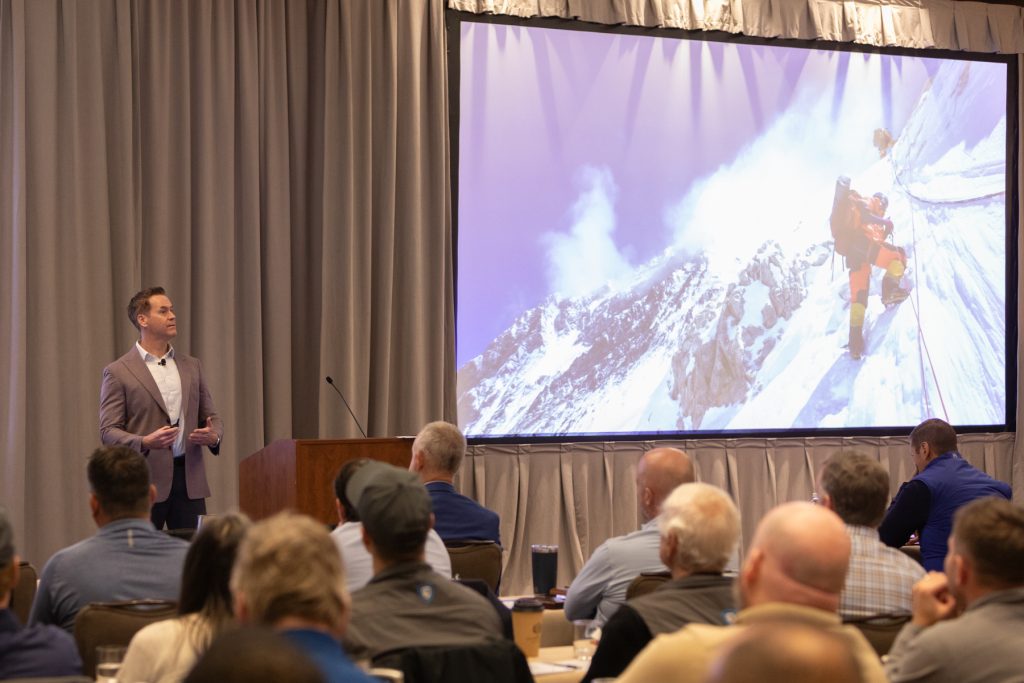
For many events, putting the keynote 30 to 60 minutes after the official start can give the audience time to arrive and settle in.
If registration begins at 8:00, for example, consider welcome remarks first and schedule the keynote for 8:30 or 8:45.
I’ve seen organizers open at 8:00 sharp with their featured motivational speaker, only to watch people quietly slip into the back of the room throughout the presentation.
That’s frustrating for everyone.
The opening keynote should answer a basic human question:
Why are we all here?
A speaker can help your audience see the mountain ahead, but they need to be in the room to see it.
Don’t Sacrifice the Keynote to the Schedule Puzzle
Sponsors, executive schedules, venue restrictions, and early departures are real constraints.
But if every other part of the agenda gets priority over audience attention, your keynote can become expensive wallpaper.
I learned something similar on a climb when weather shifted our plan.
Pushing ahead simply because the itinerary said so would have been pride dressed up as discipline. We turned around and came back with a team that could climb another day.
Your event isn’t a mountain expedition.
But the principle is similar: the schedule should serve the objective, not the other way around.
If the only available keynote slot is after an all-day workshop, immediately before cocktails, and directly against a wave of airport departures, reconsider the slot.
How Can an Event Planner Protect Audience Attention?
Once you’ve chosen your keynote placement, design the surrounding hour carefully.
A few simple changes can make a meaningful difference:
- Put breaks before the keynote rather than immediately after it.
- Avoid competing food service during the presentation.
- Don’t schedule networking activities at the same time.
- Minimize sponsor announcements immediately before the keynote.
- Tell attendees why the session matters before they enter the room.
- Ask the keynote speaker what timing and audience context will help the presentation land.
- Build five to ten minutes of breathing room if the previous session is likely to run long.
The transition matters.
If the audience is still filing into the room while the speaker begins, the message starts with a disadvantage.
A strong event speaker should feel like a moment, not another item being checked off the agenda.
Give Your Keynote a Clear Purpose
Before you finalize your event agenda, complete this sentence:
“After this keynote, I want our people to ______.”
Be specific.
Maybe you want them to start the year with confidence.
Maybe you want them to take ownership.
Maybe you want leaders to communicate differently.
Maybe you want a sales team to choose the next difficult step instead of settling for what is comfortable.
Once you know the outcome, keynote placement becomes much easier.
The speaker’s role is to help deliver that message.
The agenda’s role is to create the conditions for people to hear it.
For example, my One Step Beyond keynote is built around helping teams move from complacency to action. The message can work in different environments, but the way it lands depends on the audience, the event, and the moment.
The Takeaway: Decide What the Keynote Is Supposed to Carry
A keynote doesn’t have to be the loudest part of your event.
It has to be the right part.
Before booking a conference speaker, decide what you need the keynote to accomplish. Then give it a place on the agenda that supports that purpose.
If you’re looking for a speaker who can bring a message of action, persistence, and perspective to your event, you can check available dates for your next event.
Build the schedule with the same care you would give the summit push.
When the right message meets the right moment, people can carry it well beyond the ballroom.
FAQ
When should a keynote speaker go on at a conference?
A keynote speaker should go on when the audience is present and the purpose of the talk is clear. An opening, mid-event reset, or closing keynote can all work depending on whether you want to frame the event, re-energize attendees, or leave them with a final message.
Should the keynote be before or after lunch?
Either can work. If the keynote follows lunch, allow attendees time to return and settle before beginning. A speaker with an engaging format can also help re-energize the room after a long morning.
How long should a keynote be?
Many keynote presentations work well at approximately 45 to 60 minutes, but the ideal length depends on the event, audience, and speaker. Confirm the timing before finalizing the agenda.
About David Snow
David Snow is a keynote speaker, author of Peak Persistence, and a mountaineer who has led teams on the Seven Summits, including two expeditions on Everest. He spent more than 20 years in corporate sales leadership before taking the stage full time.
His signature keynote, One Step Beyond, helps teams move from complacency to action.